
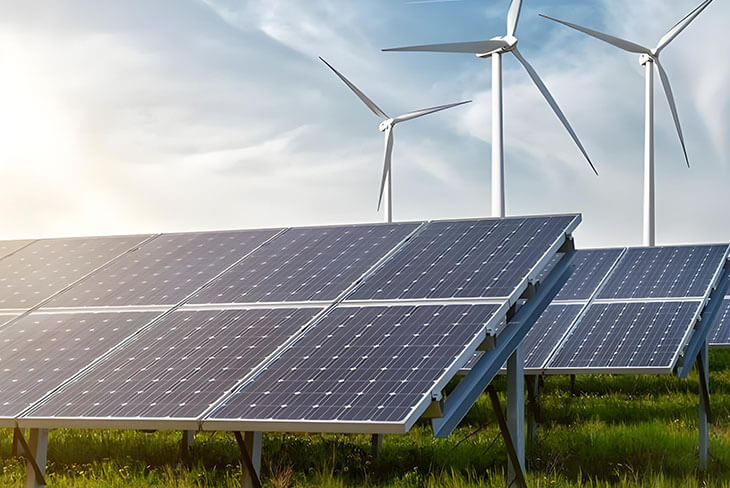
Against the backdrop of a global energy transition toward low-carbon and fossil-free systems, the solar photovoltaic (PV) industry has evolved from a policy-driven sector into a strategic new energy industry with a complete supply chain, mature technology systems, and large-scale application capabilities. As global PV installations continue to grow, module efficiency, system reliability, levelized cost of electricity (LCOE), and life-cycle environmental impact have become core industry concerns.
Among the key materials used in PV modules, glass accounts for the largest area, has the longest service life, and directly affects system performance. Whether serving as the front cover, backsheet, or in BIPV (Building Integrated Photovoltaics), vehicle-mounted PV, and specialized applications, glass has evolved from a traditional “protective material” into an engineering material that determines the upper limit of module performance.
Particularly with the rapid development of larger, higher-power modules, bifacial designs, and distributed applications, the weight of glass increasingly constrains system design, installation methods, transportation costs, and application scenarios. In this context, optimizing glass manufacturing and processing, while achieving lightweight designs without compromising reliability, has become a key direction in PV glass technology development.
This article systematically analyzes the application logic, performance requirements, processing evolution, and lightweight trends of glass in solar panels, and further explores the comprehensive impact of lightweight glass on module performance, market demand, and environmental considerations, providing engineering-relevant guidance for PV glass selection and application.
High Optical Transmittance
Solar glass must have extremely high visible light transmittance to maximize module efficiency. Low-iron ultra-clear glass is typically used to reduce light absorption from iron impurities. Surface treatments, such as texturing or anti-reflective (AR) coatings, can further minimize reflection losses.
High Mechanical Strength and Safety
Glass used in solar modules must undergo physical tempering to withstand wind loads, snow loads, and impacts during long-term outdoor use. When broken, it should fragment into small particles to ensure safety.
Excellent Weathering and Aging Resistance
Glass must maintain stable properties under prolonged exposure to UV radiation, high and low temperatures, high humidity, and complex climatic conditions, without yellowing, losing transparency, or experiencing strength degradation, ensuring a module service life exceeding 25 years.
Thermal Stability and Structural Compatibility
Solar glass should have a stable coefficient of thermal expansion to prevent warping or stress concentration under thermal cycling, and must be compatible with encapsulants such as EVA or POE.
Surface Structure and Functional Design
Surface texturing or functional coatings can improve light capture efficiency while offering glare reduction, anti-reflection, and some anti-soiling properties suitable for various light conditions and installation environments.
Electrical Insulation and Safety
Glass must provide good electrical insulation to withstand high system voltages, preventing leakage and electrical hazards.
Processing Stability and Consistency
Solar glass production requires tight control of thickness tolerances, flatness, and edge quality to minimize micro-cracks and ensure high overall yield.
Early Stage: Basic Protective Material
In the initial stage of PV development, glass primarily served as an external protective layer to shield solar cells from environmental exposure. Requirements were relatively basic, focusing on transparency and structural strength, typically using ordinary soda-lime glass or low-spec tempered glass.
Development Stage: High Transmittance and Structural Reinforcement
As module efficiency improved, higher demands on light utilization emerged. Low-iron ultra-clear glass became mainstream, significantly improving transmittance. Tempering was widely adopted to meet structural safety requirements against outdoor wind, snow, and impact.
Mature Stage: Optical Optimization and Surface Functionalization
With increasing module power density, glass began to play an optical role. Textured surfaces and AR coatings reduced reflection losses and enhanced light absorption, becoming key contributors to module output.
Transition Stage: Bifacial Modules and Structural Integration
The advent of bifacial modules changed glass applications. Glass replaced traditional backsheet materials, forming a dual-layer structure that improves weather resistance, moisture protection, and mechanical stability, extending module lifespan.
Lightweight Stage: Thinner and High-strength Development
To reduce module weight and installation costs, glass has evolved toward thinner designs, such as 2.0 mm or thinner tempered glass. This requires higher standards for strength, edge quality, and processing consistency, driving continued optimization of tempering and processing technologies.
Functional Stage: Multi-Functional Coatings and System Integration
Modern solar glass integrates multiple functions, including high-performance AR coatings, anti-soiling, self-cleaning, and corrosion resistance. Glass now contributes not only to efficiency improvement but also to system reliability and reduced operational costs.
Future Trend: Smart and Scenario-Driven Applications
With the development of BIPV, vehicle-integrated PV, and flexible applications, glass will continue to evolve toward higher transmittance, higher strength, lighter weight, and multifunctional integration, becoming a critical functional material in PV systems.
Front protection and optical entry layer: Glass serves as the module’s outermost layer, facing natural conditions and sunlight. It allows light to enter while providing physical protection against wind, rain, snow, and impact.
Core load-bearing and structural support: Tempered glass shares wind and snow loads with aluminum frames and encapsulants, maintaining long-term outdoor structural stability.
Environmental barrier: Glass isolates water vapor, oxygen, and pollutants, protecting cells and encapsulants, reducing power degradation risk, and extending module lifespan.
Optical regulation and efficiency enhancement: Textured surfaces and AR coatings optimize light incidence, reduce reflection losses, and improve cell absorption efficiency.
Electrical insulation: Glass provides electrical insulation, ensuring safe operation at high system voltages.
Backsheet and bifacial module functionality: In bifacial designs, glass serves both front and back, improving mechanical strength, moisture resistance, and long-term reliability.
Aesthetics and system integration interface: Surface quality directly affects visual appearance and system integration, crucial in BIPV applications.
Increase light transmission: Low-iron ultra-clear glass minimizes absorption by trace iron impurities, maximizing effective light reaching cells.
Reduce surface reflection losses: AR coatings reduce surface reflection, enhancing light entry and improving overall energy output.
Challenge 1: Balancing lightweight design with strength
Thinner glass must maintain mechanical strength and impact resistance, increasing requirements for tempering, edge quality, and material consistency.
Challenge 2: Long-term weathering and degradation control
Glass must resist UV, heat, humidity, and corrosion over 25+ years, maintaining transmittance and coating performance.
Challenge 3: Structural stress in large modules
Larger module sizes impose complex stresses during transport, installation, and operation. Flatness, tempering uniformity, and edge strength are critical to reliability.
Challenge 4: Coating stability and compatibility
Functional coatings like AR and anti-soiling enhance efficiency but must remain durable under heat, humidity, and UV exposure, compatible with glass and encapsulants.
Trend 1: Thin and high-strength parallel development
PV glass will continue to decrease in thickness (≤2.0 mm) while optimizing tempering and processing to achieve high-strength, thin designs.
Trend 2: Expansion of high-performance optical glass
Lower iron content, higher transmittance, and improved AR properties will support high-efficiency, high-power modules.
Trend 3: Integration of multifunctional coatings
Glass will integrate multiple functions (AR, anti-soiling, self-cleaning, corrosion resistance) to improve performance and maintainability.
Trend 4: Customized glass for new applications
BIPV, vehicle-integrated PV, and specialized environments drive customization in appearance, color, transparency, and structure.
Reduced bulk absorption: Thinner glass shortens the light path, reducing absorption by the material itself. For low-iron ultra-clear glass, ultra-thin designs minimize absorption by trace iron impurities, enhancing transmittance.
Surface reflection remains key: Thickness reduction alone does not significantly change air–glass interface reflection; AR coatings remain crucial for maximizing transmittance.
Transportation and installation cost reduction: Lighter modules reduce costs in logistics, storage, and installation, especially for large-scale or distributed projects.
Increased processing cost: Ultra-thin glass requires higher precision and process stability during cutting, edge finishing, and tempering, reducing yield and increasing unit processing cost.
Lightweight glass reduces single-glass weight by 30–40% when thickness decreases from 3.2 mm to 2.0 mm or less (from 7–8 kg/m² to 4–5 kg/m²). Since glass accounts for 50–60% of module weight, the total module weight can decrease by 15–25%, particularly in large or high-power modules. Reduced weight benefits support structure design, lowers wind and snow load requirements, and improves installation flexibility. For rooftop, BIPV, or mobile PV systems (vehicle, floating), lighter modules significantly enhance feasibility and safety.
Lighter glass enables higher transport efficiency, reduced logistics costs, easier handling during installation, faster construction, improved accuracy, and lower labor and equipment requirements.
Lightweight glass materials include low-iron ultra-clear soda-lime glass, mid-alumina glass, and high-alumina glass.
Low-iron ultra-clear glass: High transmittance, moderate cost, baseline material for PV modules.
Mid-alumina glass: >91% transmittance, good strength and weather resistance, suitable for high-efficiency modules.
High-alumina glass: Higher transmittance, superior thermal and chemical stability, suitable for high-temperature or specialized PV environments.
Raw material selection must balance optical performance, mechanical strength, and long-term durability to ensure thin glass maintains high transmittance, structural stability, and reliability in bifacial, BIPV, and mobile PV applications.
Strengthening is critical for the safe use of lightweight PV glass. Ultra-thin glass (≤2 mm) typically employs chemical tempering, which uses ion exchange to create a uniform compressive stress layer on the glass surface, significantly enhancing mechanical strength. Compared to conventional 3.2 mm physical tempering, chemical strengthening ensures high fracture resistance, flatness, and optical uniformity. Benefits include:
Reduced surface defects and stress concentration
Enhanced durability and stress resistance
Improved long-term weathering stability
Chemical-strengthened glass is ideal for high-efficiency, lightweight PV modules, bifacial structures, BIPV, and other advanced scenarios, meeting modern PV requirements for safety, weight reduction, and high performance.
As PV applications expand, demand for lightweight modules grows. In large ground-mounted plants, weight reduction lowers racking and foundation costs. In distributed and rooftop systems, it directly affects project feasibility. Emerging applications such as BIPV, vehicle-integrated PV, and flexible structures require lighter, integrated components, driving market adoption of lightweight PV glass.
From a lifecycle perspective, lightweight glass reduces raw material use and transportation energy, lowering carbon emissions. Bifacial and high-reliability structures extend module life, improving energy yield per resource input. Thus, lightweight PV glass not only reflects technological progress but also supports the green development of the PV industry.
Advances in glass manufacturing and processing are profoundly shaping the performance limits and application forms of solar modules. From high transmittance and strength to lightweight and multifunctionality, PV glass has become a vital bridge between materials engineering and energy systems.
Lightweight design is not merely thinning; it is the result of coordinated optimization across material selection, strengthening, module structure, and application scenarios. As PV applications continue to diversify and integrate, glass will play an increasingly critical and foundational role in the renewable energy ecosystem.
Ready to take your glass project to the next level? Contact us today to discuss your custom glass needs and get a quote!
contact us