
Contents:
1. Laminated Glass Material Composition, Preparation Technology and Core Properties
1.1 Material Composition
1.2 Preparation Technology
1.3 Core Properties
2. Practical Applications of Laminated Glass
2.1 Architectural Applications
2.2 Automotive Applications
2.3 Photovoltaic and Security Applications
3. Technical Challenges and Solutions
Glass stands as an indispensable material in modern architecture, automotive manufacturing and renewable energy systems, valued primarily for its transparency, hardness and chemical stability. However, inherent brittleness remains a critical limitation—monolithic glass fractures abruptly under impact or stress, producing sharp shards that pose significant safety hazards in buildings, vehicles and public spaces. Conventional safety measures such as thermal or chemical tempering can enhance strength but fail to prevent catastrophic breakage, as tempered glass often shatters into numerous small fragments when damaged.
Laminated glass, constructed by bonding two or more glass plies with a polymeric interlayer, addresses these flaws by retaining structural integrity even after fracture. The interlayer holds shattered glass fragments in place, minimizing injury risk while maintaining partial load-bearing capacity. Global demand for laminated glass continues to grow, with the global market size projected to reach $35.3 billion by 2030, driven by stringent safety regulations in construction and automotive sectors, and expanding applications in photovoltaic integration and smart buildings.
Laminated glass consists of two key components: glass plies and polymeric interlayers. The glass plies typically adopt soda-lime silicate glass, tempered glass or heat-strengthened glass, with thickness ranging from 2 mm to 19 mm depending on application requirements. To enhance optical performance and durability, the iron content of glass plies is usually controlled below 0.015% by mass, reducing solar energy absorption and improving light transmittance.
Polymeric interlayers determine the core performance of laminated glass, with three main types dominating industrial applications. Polyvinyl Butyral (PVB) is the most widely used interlayer material, accounting for over 70% of the global market. It exhibits excellent adhesion to glass, good optical clarity and effective sound insulation, but its mechanical properties are temperature-dependent—its shear modulus decreases significantly at temperatures above 40°C, affecting structural stability. Ionoplast polymer (SGP) interlayers offer higher stiffness and impact resistance, with a shear modulus 50 times that of PVB at room temperature, making them suitable for structural applications such as glass facades and railings. Ethylene Vinyl Acetate (EVA) interlayers feature superior weather resistance and compatibility with photovoltaic cells, primarily used in building-integrated photovoltaic (BIPV) systems.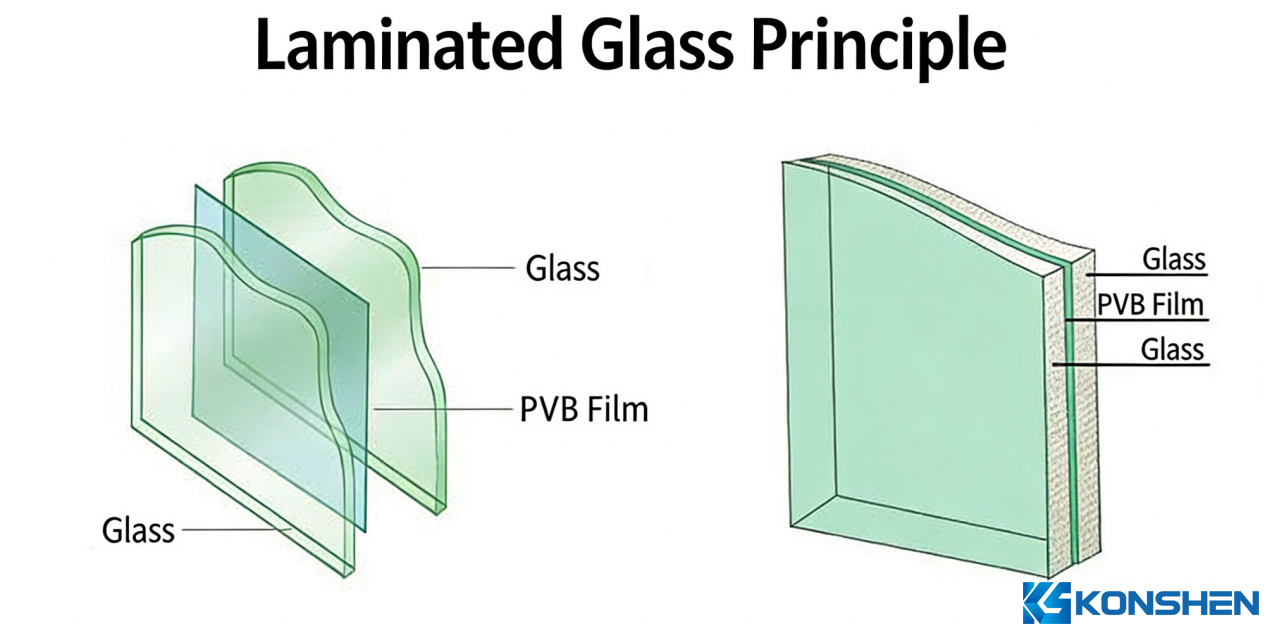
The preparation of laminated glass primarily involves two processes: dry lamination and wet lamination, with dry lamination accounting for over 95% of industrial production due to its superior quality and stability. The dry lamination process includes three key steps: glass cleaning, interlayer placement and high-temperature high-pressure lamination. First, glass plies are cleaned with ultrasonic technology to remove surface contaminants, ensuring optimal adhesion between glass and interlayer. Next, the polymeric interlayer is placed between two glass plies, and air bubbles are removed through pre-lamination at 80-120°C under vacuum conditions. Finally, the assembly is treated in an autoclave at 130-150°C and 1.0-1.5 MPa, promoting the fusion of the interlayer with the glass plies to form a homogeneous structure.
Recent technological advancements have improved preparation efficiency and product quality. Vacuum lamination without autoclave reduces production cycles by 40% while maintaining structural integrity, and laser engraving technology enables the fabrication of bio-inspired interlayer structures, enhancing the toughness of laminated glass by 30-50% compared to conventional designs.
The core properties of laminated glass, including mechanical strength, safety performance, optical performance and durability. Mechanical tests conducted by the University of Oviedo show that PVB-laminated glass with 6 mm glass plies and 0.76 mm interlayer exhibits a bending strength of 45-55 MPa, 15-20% higher than monolithic glass of the same thickness. SGP-laminated glass under the same conditions achieves a bending strength of 70-80 MPa, suitable for load-bearing structural elements.
Safety performance is the most prominent advantage of laminated glass. Destructive tests reported in PAS Journals demonstrate that point-fixed laminated glass retains 60-70% of its load-bearing capacity after fracture, with the interlayer effectively holding glass fragments to prevent injury. In impact tests with a 100 kg soft body, laminated glass with SGP interlayer resists penetration, while PVB-laminated glass prevents fragment scattering even after breaking.
Optically, high-quality laminated glass achieves a visible light transmittance of 88-92%, comparable to monolithic glass, with UV blocking rates exceeding 99% to protect interior materials from fading. Durability tests show that laminated glass maintains 90% of its initial performance after 1000 hours of exposure to harsh environments (temperature range -40°C to 80°C, humidity 85%), meeting the 25-year service life requirement for architectural and automotive applications.
Laminated glass has been widely adopted in architecture, automotive manufacturing, photovoltaic systems and security fields, driven by its superior safety and performance. Its application scope continues to expand with technological innovation, addressing diverse industry needs.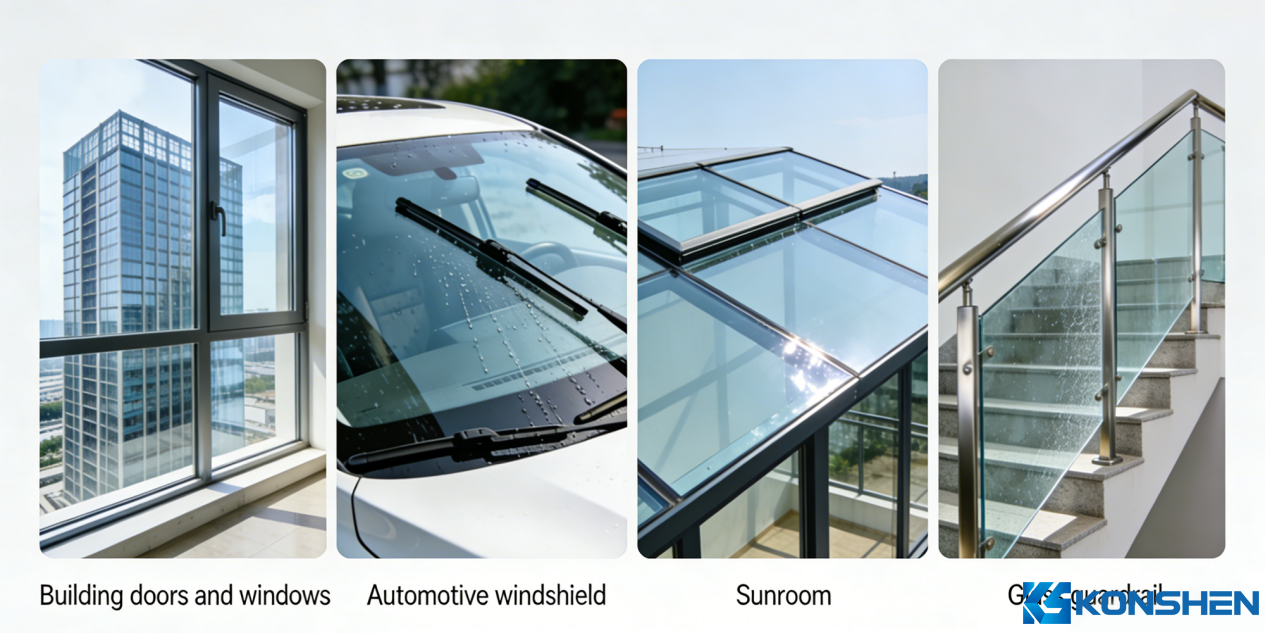
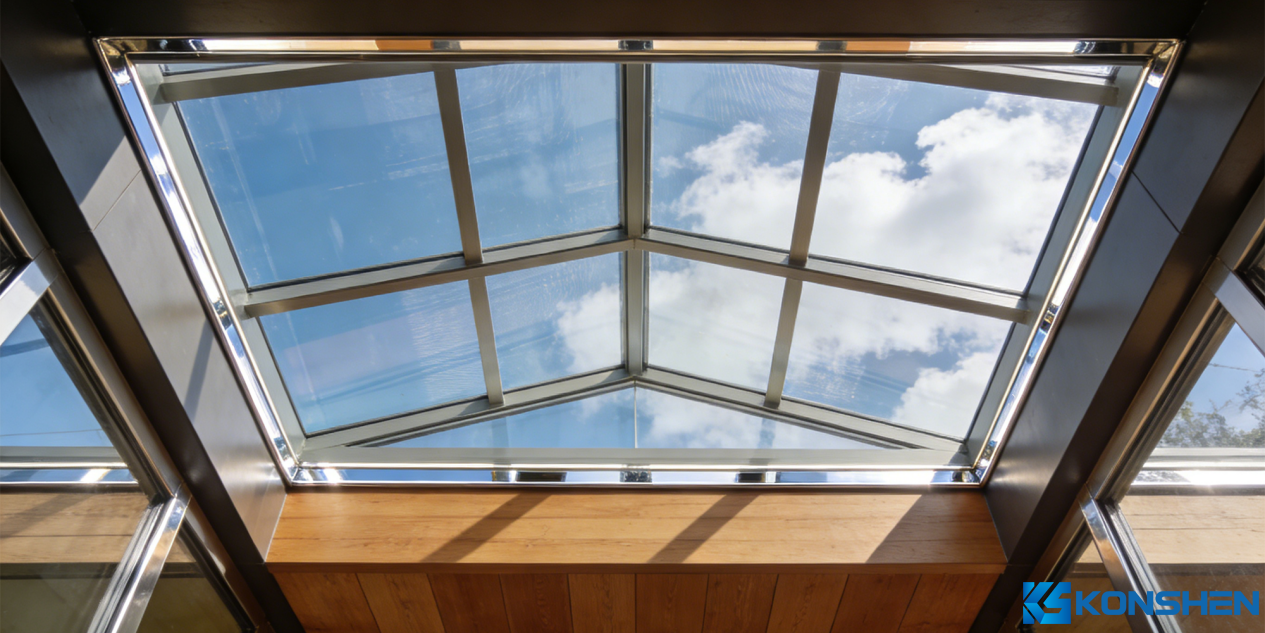
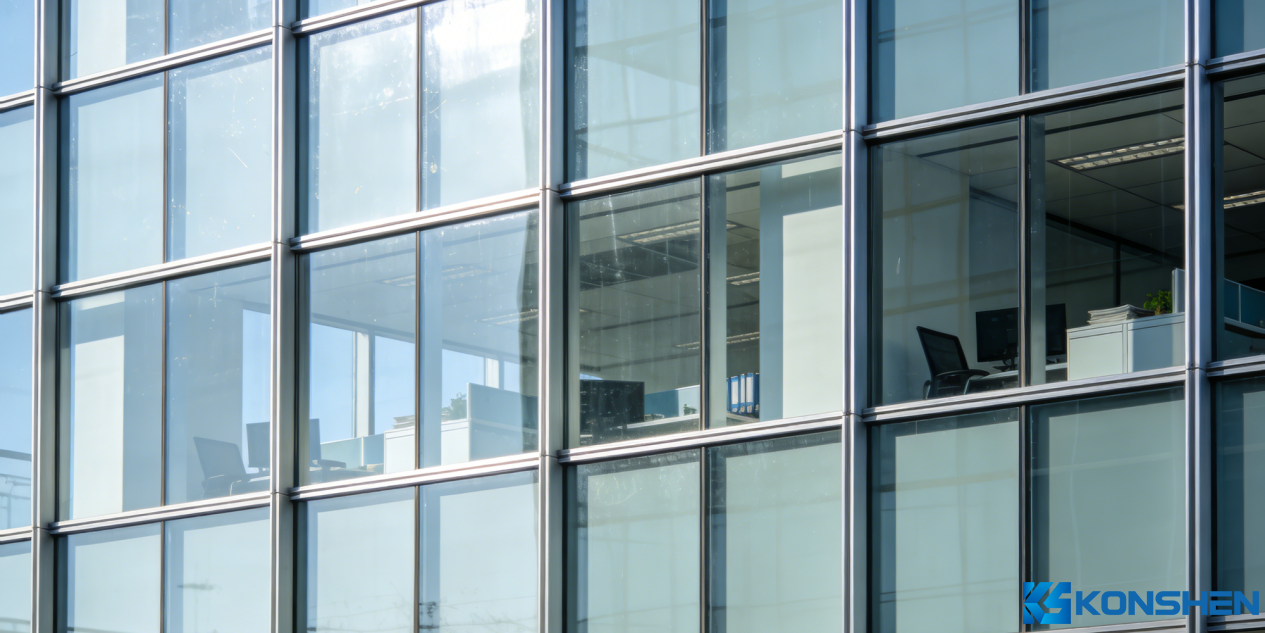
The construction sector accounts for over 65% of the global laminated glass market, with applications in facades, skylights, railings and fire partitions. In high-rise buildings, laminated glass with SGP interlayers is used for structural facades, as it can withstand strong winds and seismic loads while ensuring safety. Full-scale tests conducted by the National Centre for Research and Development (NCBR) show that point-fixed laminated glass skylights with steel mesh reinforcement maintain structural integrity under combined in-plane and perpendicular loading, reducing the risk of collapse during extreme weather.
In noise-sensitive environments such as hospitals and schools, laminated glass with sound-insulating interlayers reduces noise transmission by 35-45 dB, significantly improving indoor comfort. Additionally, laminated glass is integrated into green buildings to enhance energy efficiency—combined with low-emissivity (Low-E) coatings, it reduces heat loss by 20-30%, aligning with global carbon neutrality goals.
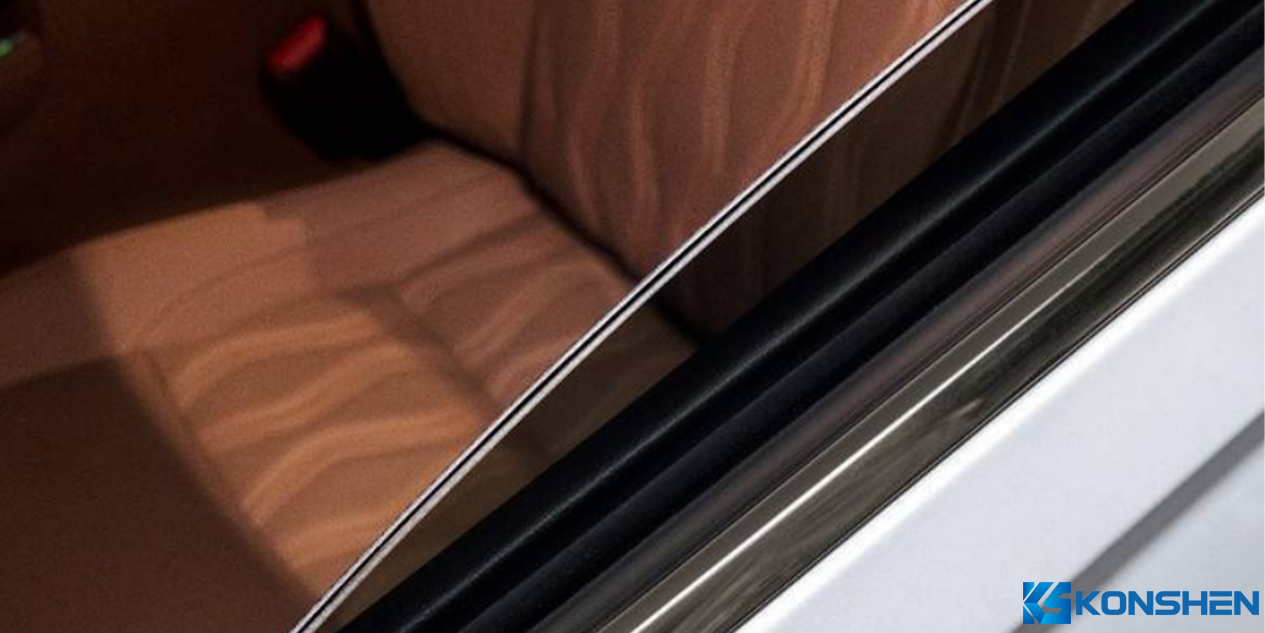
Laminated glass is a mandatory component in automotive manufacturing, primarily used for windshields and side windows. Automotive windshields adopt PVB-laminated glass with 2.1 mm glass plies and 0.76 mm interlayer, which prevents driver injury from glass fragments during collisions and maintains visibility after breakage. Tests by automotive safety organizations show that laminated windshields reduce the risk of occupant ejection by 80% compared to monolithic glass.
With the development of new energy vehicles, laminated glass is increasingly used for panoramic sunroofs and smart windows. EVA-laminated glass with electrochromic technology allows adjustable transparency, reducing solar heat gain by 40-50% and improving energy efficiency. The global demand for automotive laminated glass is projected to grow at a CAGR of 4.8% from 2024 to 2030, driven by the rising production of electric vehicles.
In photovoltaic systems, EVA-laminated glass serves as a protective cover for solar cells, providing weather resistance and light transmittance. BIPV modules using laminated glass achieve a light transmittance of 85-90% while maintaining a power conversion efficiency of 18-22%, integrating seamlessly into building facades and roofs. The global market for photovoltaic laminated glass is growing at a CAGR of over 15%, supported by policies promoting renewable energy.
In security applications, laminated glass with multiple interlayers and thick glass plies is used for bank counters, jewelry stores and military facilities. Ballistic-resistant laminated glass can withstand the impact of bullets and explosions, with levels ranging from NIJ Level II to Level IV, ensuring the safety of personnel and assets.

Despite its widespread applications, laminated glass faces several technical challenges in industrialization, including temperature sensitivity of interlayers, high production costs and recycling difficulties. These issues are being addressed through ongoing research and technological innovation.
The temperature sensitivity of PVB interlayers limits their use in high-temperature environments. Researchers at the University of Colorado Boulder have developed bio-inspired interlayer designs using laser engraving, which promote delocalized shearing of the interlayer, reducing the impact of temperature on mechanical properties. This design improves the toughness of laminated glass by 30-50% at high temperatures (60-80°C).
High production costs, particularly for SGP and smart laminated glass, hinder market expansion. Innovations in manufacturing processes, such as autoclave-free lamination and continuous production lines, reduce costs by 20-25% while improving production efficiency. Additionally, the development of low-cost bio-based interlayers derived from renewable materials lowers reliance on petroleum-based polymers, further reducing costs.
Recycling difficulties arise from the separation of glass plies and polymeric interlayers. New recycling technologies using chemical solvents or thermal treatment can separate interlayers from glass with a recovery rate of over 80%, enabling the reuse of glass and interlayer materials. These technologies are currently being tested in industrial pilot projects, with commercialization expected by 2027.
The future development of laminated glass will focus on material innovation, functional integration and sustainability. In material science, researchers are developing high-performance interlayers with enhanced stiffness, impact resistance and temperature stability, including nanocomposite interlayers and bio-based materials. Smart laminated glass integrating electrochromic, self-cleaning and energy storage functions will gain wider adoption in smart buildings and automotive applications, enabling adjustable transparency and energy harvesting.
Sustainability will be a key focus, with the development of recyclable laminated glass and low-carbon production processes. The use of renewable energy in production and the recycling of glass and interlayer materials will reduce the carbon footprint of laminated glass by 30-40% by 2030. Additionally, the integration of laminated glass with photovoltaic and energy storage systems will promote the development of net-zero energy buildings.
Laminated glass has revolutionized the application of glass in safety-critical fields by overcoming the inherent brittleness of monolithic glass. Combining transparency, mechanical strength and safety, it satisfies the diversified requirements of architecture, automotive manufacturing, photovoltaic systems and security applications. Its core performance, governed by polymeric interlayers and preparation technology, has been continuously improved through scientific research, and experimental data verify its excellent mechanical strength, safety and durability.
Although technical challenges including temperature sensitivity, high production costs and recycling difficulties still exist, ongoing innovations in material design, manufacturing processes and recycling technologies are gradually addressing these constraints. The future development of laminated glass will be oriented toward functional integration and sustainability, where smart and recyclable products will promote market expansion and support the global energy transition and carbon neutrality goals.
Ready to take your glass project to the next level? Contact us today to discuss your custom glass needs and get a quote!
contact us