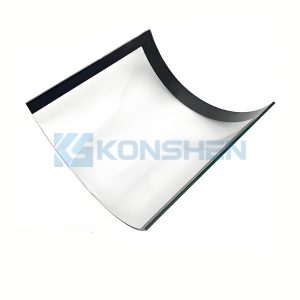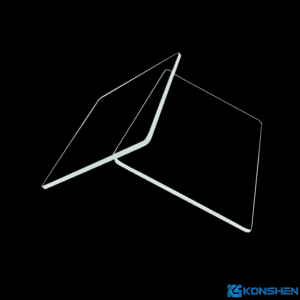
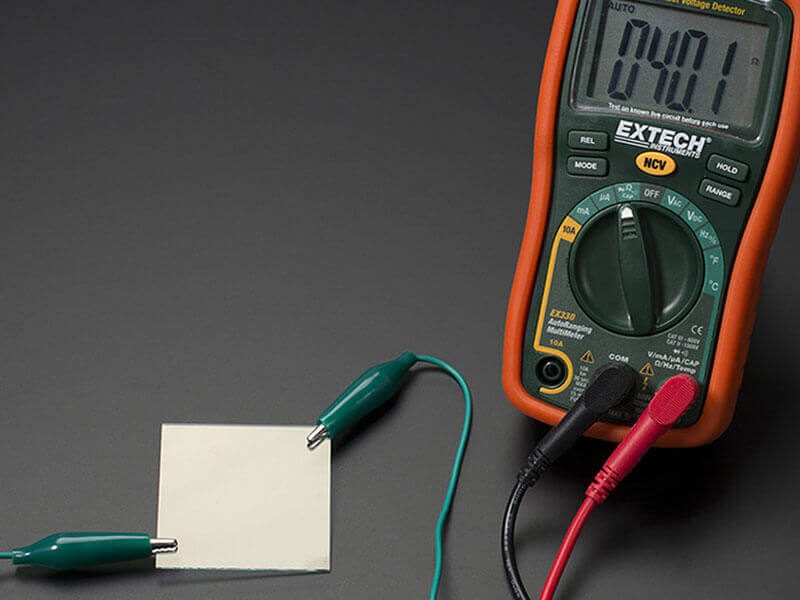
Indium Tin Oxide (ITO) coated glass is widely used in electronic devices, touch sensors, optical components, and other applications that require transparent electrical conductivity.
While single-sided ITO glass is suitable for many conventional applications, some electronic designs require conductive coatings on both sides of the glass substrate. This is where double-sided ITO coated glass becomes an important solution.
By depositing a transparent conductive ITO layer on each surface, double-sided ITO glass provides two conductive surfaces separated by an insulating glass substrate. This structure offers additional flexibility for electrical design, sensing systems, and customized electronic components.
However, adding a second ITO coating also affects the optical performance of the finished glass. How much does light transmittance change? What sheet resistance should buyers choose? And how do single-sided and double-sided ITO glass compare?
This guide explains the structure, optical properties, technical specifications, applications, and manufacturing considerations of double-sided ITO coated glass.
1. What Is Double-Sided ITO Coated Glass?
Double-sided ITO coated glass is a transparent glass substrate with an indium tin oxide (ITO) conductive layer deposited on both surfaces.
ITO is a transparent conductive oxide primarily composed of indium oxide and tin oxide. It combines electrical conductivity with optical transparency, making it suitable for applications where both light transmission and electrical functionality are required.
The basic structure consists of:
- Front surface: ITO conductive coating
- Middle layer: Glass substrate
- Back surface: ITO conductive coating
Each ITO-coated surface can function as an independent conductive layer.
This structure allows engineers to design components with conductive functions on both sides without requiring two separate glass substrates.
Important: The two conductive surfaces are not automatically electrically connected. They are separated by the insulating glass substrate and generally require separate electrical contacts.
2. Double-Sided ITO Glass vs Single-Sided ITO Glass
The main difference is the number of conductive surfaces.
Single-Sided ITO Glass
Single-sided ITO glass has a conductive coating on only one surface, while the opposite surface remains uncoated.
It is commonly used in:
- Touchscreen sensors
- Transparent electrodes
- Laboratory instruments
- Electronic components
- Optical and display-related applications
Its simpler structure can make it a cost-effective option when only one conductive surface is required.
Double-Sided ITO Glass
Double-sided ITO glass has conductive ITO coatings on both surfaces.
It may be used in:
- Capacitive sensing systems
- Transparent electrode structures
- Electronic sensors
- Electro-optical devices
- Customized electronic and optical components
Both surfaces can be designed for separate electrical functions, depending on the application.
Single-Sided vs Double-Sided ITO Glass
| Feature | Single-Sided ITO | Double-Sided ITO |
|---|---|---|
| ITO coating | One surface | Both surfaces |
| Conductive surfaces | One | Two |
| Glass substrate | Insulating | Insulating |
| Electrical design | Single conductive interface | Two separate conductive interfaces |
| Optical performance | Generally higher transmission | Additional optical loss from the second coating |
| Processing complexity | Generally simpler | More process and handling considerations |
| Material cost | Generally lower | Generally higher |
| Typical applications | Single-electrode systems | Dual-electrode and multi-functional systems |
The choice depends on the electrical architecture of the final product. Double-sided ITO is not automatically better; it is useful when the application requires conductive functionality on both surfaces.
3. How Does Double-Sided ITO Glass Affect Light Transmittance?
Light transmittance is one of the most important considerations when selecting ITO coated glass.
Although ITO is transparent, it is not optically lossless. Each conductive coating can absorb and reflect a small portion of incoming light.
When ITO is deposited on both sides of a glass substrate, light passes through two conductive layers instead of one.
As a result, double-sided ITO glass generally has lower total light transmittance than comparable single-sided ITO glass with the same substrate and similar coating design.
3.1 Why Does Double-Sided ITO Have Lower Transmittance?
There are three main reasons:
1. Light absorption
ITO absorbs part of the incoming light. Adding a second ITO layer can increase the total absorption.
2. Surface reflection
The refractive index difference between air, ITO, and glass can cause reflection at each interface. A second coating introduces additional optical interfaces.
3. ITO Film Thickness
ITO film thickness is closely related to electrical and optical performance.
In many conventional sputtered ITO systems, achieving lower sheet resistance requires a thicker or otherwise differently optimized conductive film. This can change absorption, reflection, and interference effects.
The relationship is not always linear because optical interference and deposition parameters also influence the final result.
3.2 Single-Sided vs Double-Sided ITO Transmittance Comparison
The following table provides an indicative engineering comparison for glass substrates with similar material and coating designs.
| Parameter | Single-Sided ITO | Double-Sided ITO |
|---|---|---|
| Number of ITO layers | 1 | 2 |
| Typical coating structure | Glass + ITO | ITO + Glass + ITO |
| Light absorption | Lower | Generally higher |
| Surface reflection | One coated surface | Two coated surfaces |
| Overall transmittance | Generally higher | Generally lower |
| Optical uniformity | Depends on one coating | Depends on both coatings |
| Coating design | One-sided optimization | Two-sided optical optimization |
3.3 Indicative Transmittance Reference
For preliminary engineering evaluation, the following values can be used as a planning reference for standard transparent ITO coatings.
| Parameter | Single-Sided ITO | Double-Sided ITO |
|---|---|---|
| Glass substrate | Similar substrate | Similar substrate |
| ITO sheet resistance per side | 80–120 Ω/sq | 80–120 Ω/sq on each side |
| Number of coated surfaces | 1 | 2 |
| Indicative visible transmittance | Approximately 87–89% | Approximately 82–86% |
| Measurement basis | Visible spectrum or specified wavelength | Same measurement basis required |
Important technical note: These figures are indicative engineering estimates, not guaranteed Konshen Glass production specifications. Actual transmittance depends on the substrate, ITO film thickness, refractive index, deposition conditions, and optical design.
The double-sided estimate should not be used as a fixed acceptance standard. It should be verified through actual sample measurements.
For a simplified optical estimate, when both coatings have similar properties:
T(double-sided) ≈ T(single-sided)² / T(bare substrate)
This is an approximation that assumes comparable coatings and neglects detailed thin-film interference and other optical effects. Actual measurements may differ.
3.4 Why the Measurement Method Matters
When comparing single-sided and double-sided ITO glass, buyers should specify the measurement conditions.
Two commonly used approaches are:
- Transmittance at 550 nm: Measures light transmission at a specific wavelength in the visible spectrum.
- Average visible transmittance (400–700 nm): Evaluates transmission across the visible wavelength range.
These two measurements are not interchangeable.
For example, a product with 87% transmittance at 550 nm does not necessarily have an average visible transmittance of 87%.
For projects with demanding optical requirements, specify the wavelength range, measurement method, and whether the value applies to the complete coated glass.
4. Key Technical Specifications of Double-Sided ITO Glass
When sourcing double-sided ITO glass, buyers should consider several important technical parameters.
4.1 Glass Thickness
Glass thickness affects mechanical strength, optical properties, handling, and the overall structure of the finished component.
Common thickness options evaluated by Konshen Glass for double-sided ITO applications include:
| Glass Thickness | Coating Configuration |
|---|---|
| 0.40 mm | Double-sided ITO |
| 0.55 mm | Double-sided ITO |
| 0.70 mm | Double-sided ITO |
| 1.00 mm | Double-sided ITO |
Very thin glass requires additional consideration during coating, handling, cutting, and packaging.
For reference, Konshen Glass supports single-sided ITO configurations in 0.10 mm and 0.20 mm glass. These thin options should not be assumed to be available for double-sided coating.
4.2 Sheet Resistance (Ω/sq)
Sheet resistance is one of the most important parameters for ITO coated glass.
It describes the electrical resistance of a thin conductive film and is commonly expressed in ohms per square (Ω/sq).
For double-sided ITO glass, sheet resistance should be specified separately for each surface.
For example:
- Front side: 80–120 Ω/sq
- Back side: 80–120 Ω/sq
Alternatively, different sheet resistance requirements may be specified for the two surfaces if the electrical design requires them.
A lower sheet resistance generally indicates higher electrical conductivity, but it may involve changes in coating thickness and optical performance.
The appropriate value should be selected according to the application’s electrical and optical requirements.
Important: Sheet resistance is a property of each individual conductive layer. The two surface values should not be added together or treated as one combined sheet resistance.
4.3 ITO Film Thickness
ITO film thickness affects both electrical conductivity and optical performance.
The relationship between film thickness and sheet resistance depends on the material composition, deposition process, and film quality.
The following table illustrates representative single-sided ITO specifications from commercially published technical data. These are industry reference examples, not guaranteed specifications for double-sided ITO glass.
| Sheet Resistance | Representative ITO Film Thickness | Published Transmittance |
|---|---|---|
| 100 Ω/sq | Approximately 20–30 nm | Around 87–89% |
| 80 Ω/sq | Approximately 30 nm | Around 86% |
| 50 Ω/sq | Approximately 40 nm | Around 84% |
| 30 Ω/sq | Approximately 60–65 nm | Around 80–85% |
| 20 Ω/sq | Approximately 90–95 nm | Around 83–86% |
These values are examples from different commercial specifications and should not be interpreted as one universal performance curve.
In particular, transmittance may vary with glass thickness, coating design, measurement wavelength, and deposition technology.
For double-sided ITO glass, the film thickness on each surface should be considered separately.
4.4 Optical Transmittance
Optical transmittance indicates the percentage of incident light passing through the finished glass.
For double-sided ITO glass, light passes through:
- The front ITO coating
- The glass substrate
- The back ITO coating
Therefore, the finished optical performance depends on the substrate and both conductive coatings.
Buyers should specify whether the required transmittance applies to the complete double-sided coated glass or to an individual coating.
For demanding optical applications, confirm:
- Visible light transmittance
- Measurement wavelength range
- Measurement conditions
- Optical uniformity
- Acceptable color appearance
The optical requirements should be evaluated together with the sheet resistance target.
4.5 Coating Uniformity
Uniform ITO deposition is important for consistent electrical performance.
Variations in coating thickness can affect sheet resistance and optical properties.
For applications requiring stable electrical characteristics, buyers should discuss:
- Sheet resistance uniformity
- Measurement locations
- Acceptable resistance variation
- Coating surface quality
- Inspection requirements
The exact inspection criteria should be agreed upon before production.
5. Recommended ITO Specifications for Different Applications
Different applications require different balances between conductivity and optical transmission.
The following table provides a general starting point for engineering discussions.
| Application | Suggested Sheet Resistance | Optical Priority |
|---|---|---|
| General transparent electrodes | 80–120 Ω/sq | High transmittance |
| Touch sensing components | 60–120 Ω/sq | Balance of conductivity and transparency |
| Higher conductivity electrodes | 30–60 Ω/sq | Electrical performance |
| Low-resistance conductive components | 10–30 Ω/sq | Lower resistance, with optical trade-offs |
These are indicative selection ranges, not universal industry standards. Actual requirements depend on electrode geometry, current, device architecture, and coating specifications.
For double-sided ITO glass, specify the required sheet resistance independently for the front and back surfaces.
6. Applications of Double-Sided ITO Coated Glass
Double-sided ITO glass can support different electronic and optical designs.
6.1 Capacitive Sensors and Touch Systems
ITO is widely used as a transparent electrode material in capacitive sensing systems.
Double-sided ITO glass can provide two conductive interfaces for customized sensing structures.
Depending on the electrode design and electronics, the two conductive surfaces may serve different sensing or electrical functions.
6.2 Transparent Electrodes
Some electronic and optical devices require transparent conductive surfaces on both sides of a glass substrate.
Double-sided ITO glass can provide two electrode interfaces while maintaining a transparent glass structure.
6.3 Electro-Optical Devices
Certain electro-optical structures use transparent conductive electrodes to apply electric fields across functional layers.
Double-sided ITO glass may be incorporated into customized electrode assemblies, depending on the device architecture.
6.4 Sensors and Laboratory Equipment
ITO coated glass is also used in specialized sensors, analytical equipment, and laboratory-related electronic components.
Double-sided coating can be considered when a project requires conductive interfaces on both sides of the glass.
7. Can Double-Sided ITO Glass Be Patterned?
Yes. ITO coatings can be patterned through suitable etching processes to create specific conductive areas and electrode structures.
Patterned ITO glass may include:
- Custom electrode shapes
- Conductive tracks
- Isolated conductive areas
- Defined transparent windows
- Customized electrical connection regions
For double-sided patterned ITO glass, both surfaces may require separate pattern designs.
The design should consider:
- Front-side pattern layout
- Back-side pattern layout
- Alignment between the two sides
- Required electrical isolation
- Electrode dimensions
- Connection and contact areas
- Etching tolerances
A technical drawing is essential for evaluating patterned double-sided ITO projects.
Buyers should provide separate front and back views when the two sides have different patterns.
8. What Should OEM Buyers Consider When Ordering Double-Sided ITO Glass?
A clear technical specification helps manufacturers evaluate feasibility and provide an accurate quotation.
| Specification | Information Required |
|---|---|
| Glass dimensions | Length × width |
| Glass thickness | 0.40 / 0.55 / 0.70 / 1.00 mm or customized |
| Coating sides | Double-sided ITO |
| Front-side resistance | Required Ω/sq |
| Back-side resistance | Required Ω/sq |
| ITO film thickness | Target thickness per side, if specified |
| Optical transmittance | Target value and measurement conditions |
| ITO pattern | Unpatterned or patterned |
| Pattern drawing | Separate front and back drawings, if applicable |
| Edge processing | Cutting, grinding, drilling, or polishing |
| Quantity | Prototype and production quantities |
| Application | Touch sensor, electrode, optical device, or other application |
For patterned ITO glass, buyers should provide the electrical layout and connection requirements.
For unpatterned double-sided ITO glass, the main specifications are generally dimensions, thickness, sheet resistance on each side, optical requirements, and quantity.
9. Double-Sided ITO Glass Manufacturing and Quality Considerations
Producing double-sided ITO glass requires careful control of the conductive coatings on both surfaces.
The manufacturing process may include:
- Glass substrate preparation and cleaning.
- ITO deposition on the first surface.
- ITO deposition on the second surface.
- Electrical and optical inspection.
- Cutting and edge processing, where required.
- Patterning and etching, if specified.
- Final inspection and protective packaging.
Depending on the process sequence, additional precautions may be necessary to protect the first coated surface while processing the second side.
Quality evaluation should include:
- Sheet resistance on each side
- Coating uniformity
- Optical transmittance
- Surface cleanliness
- Coating defects
- Dimensional accuracy
- Pattern accuracy, when applicable
The inspection method and acceptance criteria should be confirmed with the manufacturer before production.
10. Why Choose Konshen Glass for Customized ITO Glass?
Konshen Glass provides customized glass processing solutions for industrial, electronic, and optical applications.
With 20 years of glass processing experience and ISO 9001 and ISO 14001 certifications, we support customers with customized glass specifications and project-based manufacturing requirements.
Our ITO glass solutions can be evaluated according to:
- Single-sided and double-sided ITO configurations
- Different glass thicknesses
- Customized sheet resistance requirements
- Unpatterned and patterned ITO designs
- CNC cutting and edge processing
- Customized dimensions and packaging
For double-sided ITO glass, our commonly evaluated thickness options include 0.40 mm, 0.55 mm, 0.70 mm, and 1.00 mm.
A 500 × 400 mm substrate with 80–120 Ω/sq ITO coating is one of the commonly considered cost-effective configurations, subject to project requirements and availability.
For customized patterned ITO glass, customers should provide technical drawings so that the coating and pattern requirements can be evaluated.
Whether you need prototype quantities or production batches, our team can review your requirements and discuss a suitable solution.
11. Frequently Asked Questions
What is double-sided ITO glass?
Double-sided ITO glass is a glass substrate with transparent conductive indium tin oxide coatings on both surfaces. Each surface provides a separate conductive interface.
What is the difference between single-sided and double-sided ITO glass?
Single-sided ITO glass has a conductive coating on one surface, while double-sided ITO glass has conductive coatings on both surfaces. Double-sided glass is suitable for applications requiring two conductive interfaces.
Does double-sided ITO glass have lower transmittance than single-sided ITO glass?
Generally, yes. The second ITO coating introduces additional optical absorption and reflection. However, the actual difference depends on the substrate, coating thickness, sheet resistance, and optical design.
How much transmittance is lost when adding a second ITO coating?
There is no universal fixed percentage. For preliminary evaluation, double-sided ITO glass with comparable coatings may show a few percentage points lower transmittance than single-sided glass. Actual performance should be confirmed through testing of the complete coated substrate.
Are the two sides of double-sided ITO glass electrically connected?
No. The two ITO coatings are separated by the insulating glass substrate. They generally operate as independent conductive surfaces unless a separate electrical connection is designed.
Can both sides have different sheet resistance values?
Yes. The front and back ITO coatings can be specified with different sheet resistance targets, depending on manufacturing feasibility and application requirements.
What thicknesses are available for double-sided ITO glass?
Commonly evaluated options from Konshen Glass include 0.40 mm, 0.55 mm, 0.70 mm, and 1.00 mm. Actual availability should be confirmed according to the project specification.
Can double-sided ITO glass be patterned?
Yes. Both sides can be considered for customized ITO patterns. The front-side and back-side drawings should be provided separately when their layouts are different.
What information is needed for a double-sided ITO glass quotation?
Provide the glass dimensions, thickness, sheet resistance requirements for both sides, optical transmittance target, pattern drawings if applicable, quantity, and intended application.
Conclusion
Double-sided ITO coated glass provides two transparent conductive surfaces separated by an insulating glass substrate.
Compared with single-sided ITO glass, it offers additional flexibility for electronic designs that require conductive functionality on both sides. However, the second conductive layer generally introduces additional optical losses.
Successful material selection requires balancing sheet resistance, optical transmittance, glass thickness, coating uniformity, and pattern requirements.
At Konshen Glass, we support customized ITO glass solutions for industrial, electronic, and optical applications.
Looking for a double-sided ITO glass supplier?
Send us your glass dimensions, thickness, front and back sheet resistance requirements, optical transmittance target, and project quantity. Our team can help evaluate your specifications and provide a customized quotation.
Contact Konshen Glass to discuss your double-sided ITO glass project.