
With the growing demand for high-quality visual displays, solar panels, and smart appliances, AG (Anti-Glare) glass has become a critical material to reduce surface reflection and enhance visual clarity. Its surface treatment technology directly affects optical performance, durability, and overall product aesthetics.
The core parameters of AG (Anti-Glare) glass can be categorized into three major classes: optical performance, physical specifications, and surface characteristics, among which gloss is the most critical p
arameter, directly determining the anti-glare effect. The following outlines the definitions, testing standards, and industry application logic for each parameter:

Measures how mirror-like the glass surface is. The lower the value, the rougher the surface, the stronger the diffuse reflection, and the better the anti-glare effect.
Testing Standard: Usually measured with a 60° gloss meter (e.g., WGG-60), testing 5 points and taking the average. Typical procurement specifications are 80±10 or 100±10, with incoming inspection tolerances of ±13 or ±15.
Industry Applications:
Automotive: 110 (needs AR/AF coating)
Indoor high-light environments (medical devices, POS machines): 95
Outdoor environments (ATMs, advertising screens): ≤70
Strong sunlight areas (e.g., Middle East): ≤50
Touch panels (computer touch screens): ≤35
Proportion of visible light (380–700 nm) transmitted through the glass, affecting screen brightness.
Standard: ≥88% (etched AG glass may slightly decrease; spray-coated AG glass usually unaffected)
Proportion of scattered light deviating more than 2.5° from the incident light. Higher haze results in a blurrier image.
Relationship: Inversely proportional to gloss (lower gloss → higher haze) and clarity (higher haze → lower clarity)
Measures the ability of the glass to reproduce images. Calculated as:
C%=M−mM+m×100%C% = rac{M - m}{M + m} imes 100%C%=M+mM−m×100%where M and m are maximum and minimum light flux.
Key Point: Clarity is not directly related to haze or transmittance. Smaller particle size and narrower distribution lead to higher clarity.
Distance between the upper and lower surfaces of the glass. Common range: 1.1 mm – 6 mm.
Tolerance: Determined per customer sample. Generally ±0.2 mm; thickness variation within the same piece ≤0.2 mm (3 mm glass) or ≤0.3 mm (4 mm / 6 mm glass).
Length / Width: ±0.5 mm
Diagonal: difference between the two diagonals ≤0.2% of average diagonal length
Allowed chipping: length ≤3 mm, width ≤0.5 mm
Cutting cracks and edge explosions are strictly prohibited
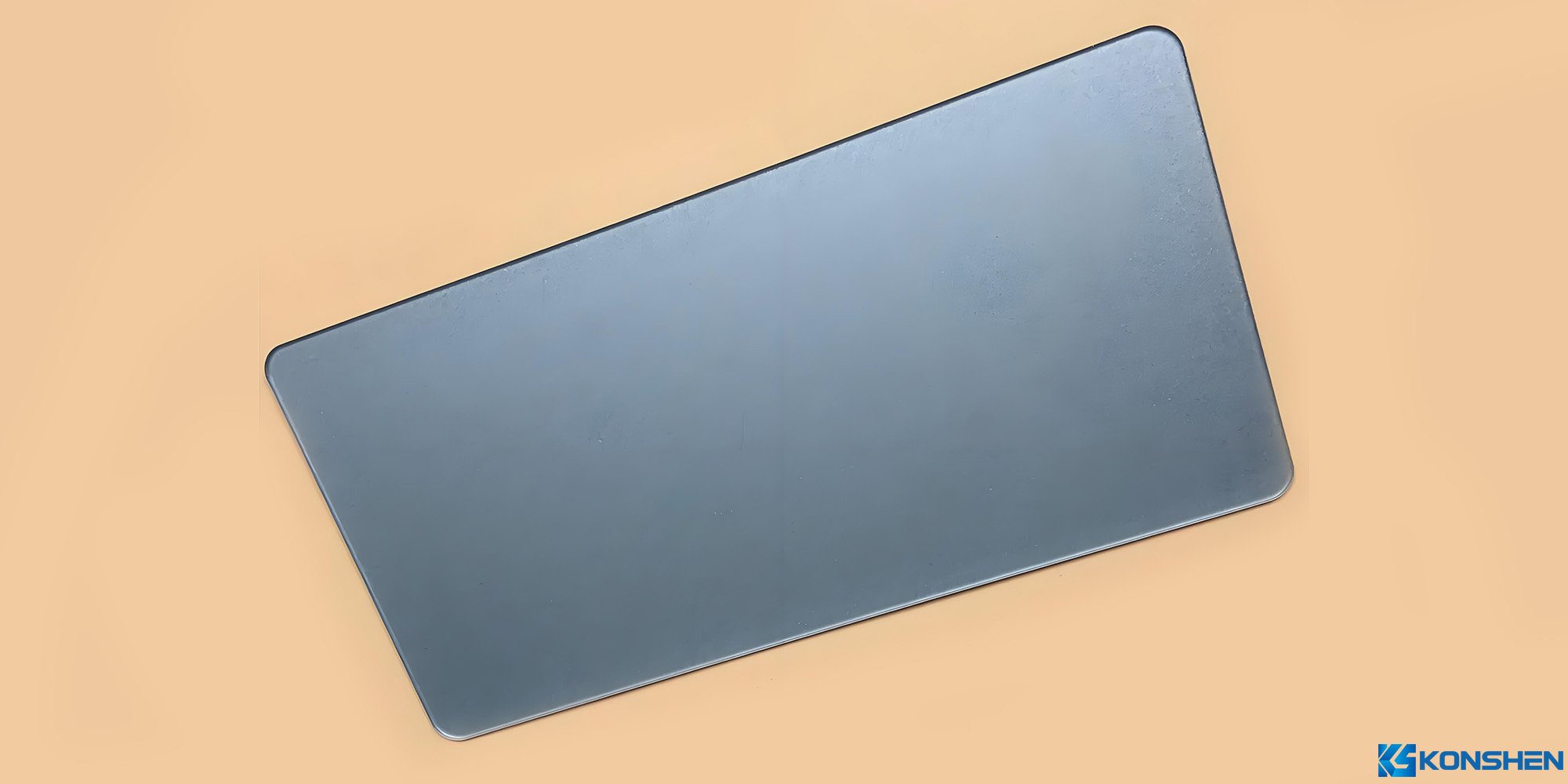
Micro-level unevenness of the surface, inversely related to gloss.
Common Metric: Ra (arithmetical average deviation of the profile, μm); Rz can be included for high-precision applications
Diameter of surface particles after etching, measured under a microscope. More uniform particles lead to more stable anti-glare performance.
Local reflections caused by uneven surface particles. Fewer sparkle points occur with lower gloss.
Distinctness of Image (DOI): Sharpness of reflected images, related to particle distribution; smaller, more uniform particles yield higher DOI.
Abrasion Resistance: Tested with 500 g weight + #0000 steel wool, 2000 strokes; gloss reduction ≤15%.
Water Contact Angle: ≥105° (indicating anti-fingerprint performance)
When selecting AG glass, the gloss level should be determined first to match the intended application, then balanced with transmittance, haze, and surface roughness to optimize the anti-glare effect and image clarity.
Outdoor devices: prioritize low gloss (≤70)
Automotive devices: require high gloss (≈110) combined with AR/AF coating technologies
The etching method uses a chemical solution to create a uniform micro-texture on the glass surface. This microscopic roughness scatters light uniformly, effectively reducing glare and reflection while maintaining high transparency.
Key Features:
Stable and long-lasting anti-glare effect.
No coating layer — strong wear, humidity, and chemical resistance.
Ideal for displays, solar panels, touch panels, and appliance cover glass.
Typical Process Flow:
Cutting → Cleaning → Surface Activation → Acid Etching → Rinsing → Drying → Inspection
Main Parameters:
Surface Roughness (Ra): 0.02 – 0.10 μm
Haze: 3% – 25%
Light Transmittance: ≥ 90% (ultra-clear substrate)
Gloss (60°): 10 – 70 GU
The spray coating method applies a nano-material layer onto the glass surface using precision spraying technology. After curing, the coating forms a fine matte texture that diffuses light and minimizes reflection.
Key Features:
Flexible optical adjustment through coating thickness and particle control.
High production efficiency and uniform surface effect.
Optional added functions such as anti-fingerprint or easy-to-clean properties.
Typical Process Flow:
Cutting → Cleaning → Surface Pre-treatment → Spray Coating → Leveling → UV / Thermal Curing → Inspection
Main Parameters:
Coating Thickness: 3 – 10 μm
Haze: 5% – 30%
Transmittance: ≥ 88%
Pencil Hardness: 3H – 9H
Adhesion: Grade 0 – 1 (ASTM D3359)
Chemical Resistance: ≥ 5 cycles (alcohol/alkali test)
Inspection and Quality Testing
AG glass requires strict quality control to ensure consistent optical and physical performance. Huizhou Konshen Glass adopts international testing standards for each production batch.
| Inspection Item | Testing Method | Standard / Reference | Purpose |
|---|---|---|---|
| Transmittance | Spectrophotometer | ASTM D1003 / GB/T 2410 | Evaluate light transmission |
| Haze | Haze Meter | ASTM D1003 | Assess anti-glare performance |
| Surface Roughness (Ra) | Optical Profiler / AFM | ISO 4287 | Ensure surface uniformity |
| Gloss (60°) | Gloss Meter | ASTM D523 | Check reflection control |
| Adhesion | Cross-cut Tape Test | ASTM D3359 | Evaluate coating adhesion |
| Hardness | Pencil Hardness Tester | ASTM D3363 | Measure surface durability |
| Chemical & Salt Spray Resistance | Immersion / Salt Spray Test | ASTM B117 | Verify environmental stability |
AG anti-glare glass not only effectively reduces screen reflections and light interference but also provides viewers with a clearer image, more vibrant colors, and more saturated hues. With the application of AG glass in electronic products such as automotive displays and smartphone screens, an increasing number of glass manufacturers have begun to take notice of this emerging market. Anti-glare AG glass is being widely used in industrial control fields. Instrument panels, smart production lines, precision equipment, semiconductors, and other industrial control device panels often struggle to display content clearly under strong light or when operated outdoors due to glare, leading to operational difficulties. The principle of AG glass involves transforming the reflective surface of the original glass into a matte, diffuse reflection surface, reducing environmental light interference and thereby improving the viewing angle and brightness of the display. This reduces screen reflections, resulting in clearer images, more vivid colors, and more saturated hues, significantly enhancing display quality. Thus, AG anti-glare glass covers not only ensure clear visibility of displayed content but also eliminate the safety hazards caused by screen glare, making operations smoother, more responsive, and safer. Additionally, tactile feedback is crucial for operators when using industrial control touchscreens. AG anti-glare glass touchscreens offer a smooth, paper-like feel, ensuring fluid operation with consistent uniformity. They are also scratch-resistant, leaving no marks or peeling over time.
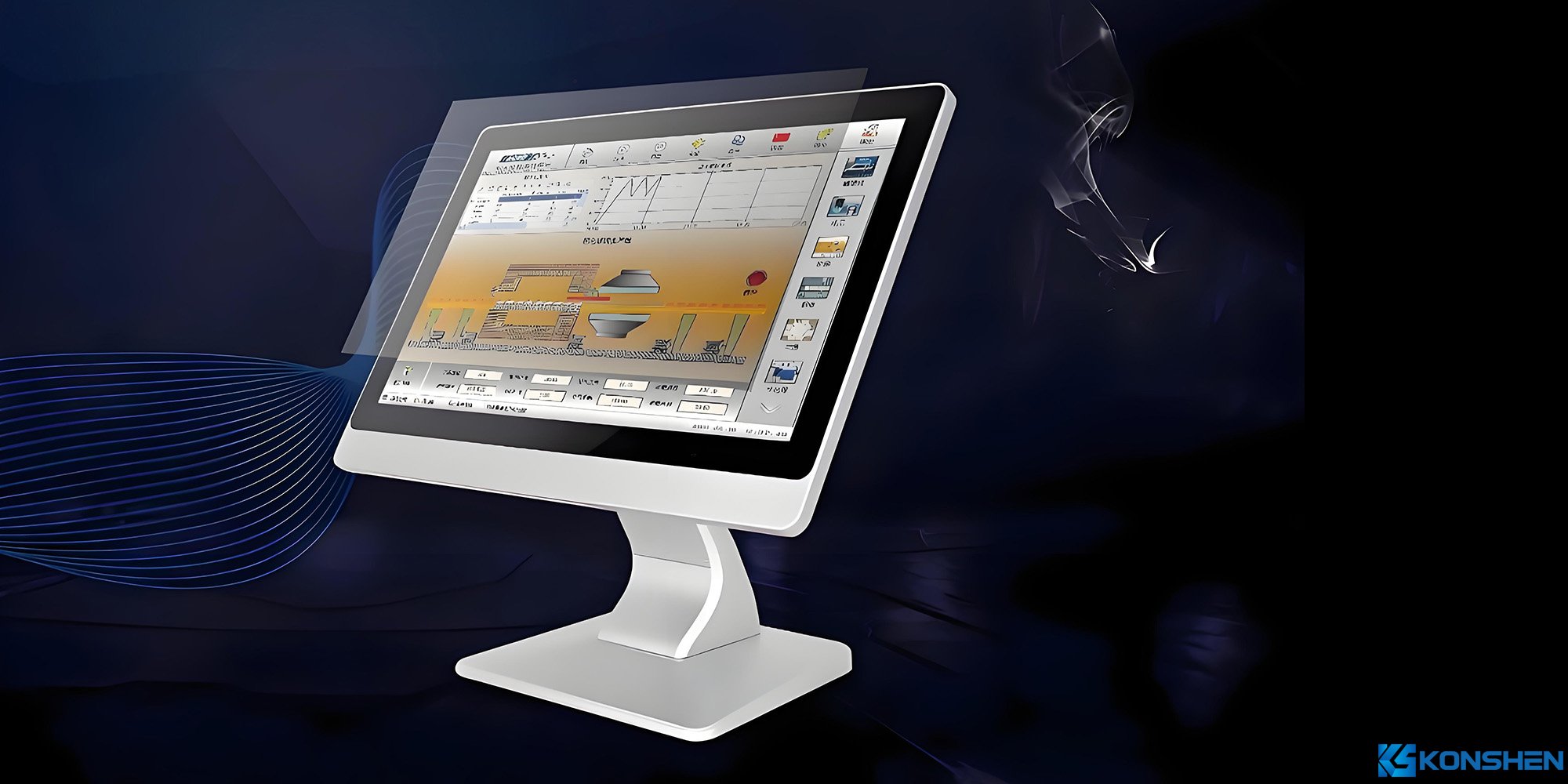
Through continuous technological advancement, Huizhou Konshen Glass Co., Ltd provides both etched and spray-coated AG glass solutions that meet the diverse needs of global customers. With precise surface control, stable optical parameters, and strict inspection standards, Konshen Glass delivers high-performance anti-glare glass for solar, appliance, and optical industries worldwide.
E-Mail: Lucy@konshenglass.com
WEB: www.konshenglass.com
Ready to take your glass project to the next level? Contact us today to discuss your custom glass needs and get a quote!
contact us