
Contents:
Introduction
1. Why Is Heat Soak Testing Important?
1.1 Characteristics of Tempered Glass
1.2 Causes of Spontaneous Breakage in Tempered Glass and Fragment Characteristics
1.3 Importance of Heat Soak Testing
2. What Is the Heat Soak Testing Process
2.1 Principle of Heat Soak Testing
2.2 Heat Soak Testing Process Flow
2.3 Equipment and Materials for Heat Soak Testing
3. Standards and Quality Inspection for Heat Soak Testing
3.1 Heat Soak Testing Standards
3.2 Quality Inspection Methods
4. Is Heat Soak Testing Necessary? How to Decide?
4.1 Glass Projects That Require Heat Soak Testing
4.2 Glass Projects That May Not Require Heat Soak Testing
Tempered glass is an important type of safety glass material. Due to its excellent mechanical strength, impact resistance, and safe breakage characteristics, it is widely used in building curtain walls, interior decoration, electronic devices, transportation facilities, and industrial equipment. Compared with ordinary annealed glass, tempered glass forms a high compressive stress layer on its surface through a thermal tempering process, which significantly improves the bending strength and impact resistance of the glass.
However, even after tempering, glass still has a certain probability of spontaneous breakage during actual use. To reduce the risk of spontaneous breakage in tempered glass during service, the industry commonly adopts an additional process known as Heat Soak Testing (HST). Heat soak testing involves heating tempered glass at a specific temperature for an extended period of time, allowing glass panels with potential internal defects to break in advance within the factory. In this way, products that may spontaneously break in service can be screened out, thereby improving the safety and reliability of the final product.
This article will systematically introduce the heat soak testing technology of tempered glass from several aspects, including the causes of spontaneous breakage in tempered glass, the principle of heat soak testing, the process flow, industry standards, and its application scenarios.
Tempered glass is a type of safety glass produced by heating ordinary glass to a temperature close to its softening point (approximately 620 °C) and then rapidly and uniformly cooling it. This process creates a strong compressive stress layer on the surface of the glass, while a corresponding tensile stress structure forms inside the glass.
This stress distribution enables tempered glass to achieve four to five times the bending strength of ordinary glass. Due to its high strength, impact resistance, thermal shock resistance, and safety performance, tempered glass is widely used in applications that require enhanced safety protection.
Although tempered glass has high strength and safety performance, there is still a certain probability that it may break spontaneously without any external force, a phenomenon known as spontaneous breakage of tempered glass. According to industry statistics, the spontaneous breakage rate of tempered glass is typically around 0.2% (about 2‰).
The main causes of spontaneous breakage in tempered glass include:
Nickel sulfide (NiS) inclusions
Internal impurities in the glass
Edge processing defects
Installation stress
Temperature differences in the external environment
Among these factors, nickel sulfide (NiS) inclusions are considered one of the most significant causes.
During the glass manufacturing process, a very small amount of nickel may combine with sulfur to form tiny NiS crystals. These microscopic particles can undergo crystal phase transformation during the tempering process. NiS remains in a stable α-phase at high temperatures, but transforms into the β-phase at lower temperatures. When this phase transformation occurs, the volume of the NiS crystal expands.
NiS particles that cause spontaneous breakage generally have a diameter between 0.04 mm and 0.65 mm, with an average particle size of about 0.2 mm. In glass, NiS inclusions are usually located in the tensile stress zone, with most of them concentrated in the high tensile stress area near the center of the glass panel. Because tempered glass contains a significant internal stress structure, when the NiS crystals gradually expand in volume, they may disrupt the internal stress balance of the glass, eventually leading to sudden breakage.
Fragment Characteristics of Spontaneous Breakage in Tempered Glass
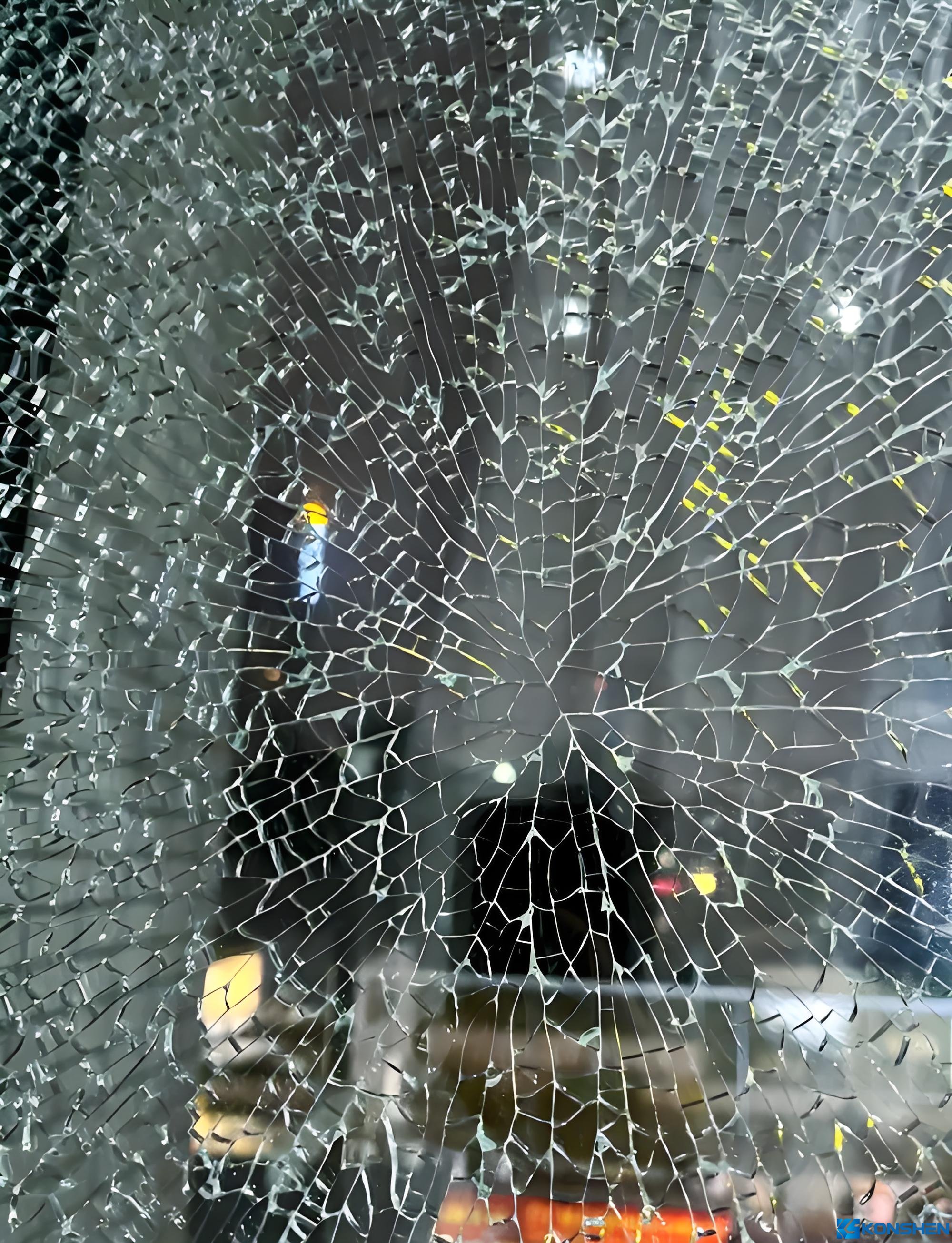 When spontaneous breakage in tempered glass is caused by nickel sulfide (NiS) inclusions, radial cracks usually form around the origin of the breakage. If the broken glass remains within the frame after fracture, it is often possible to identify a characteristic “figure-eight” or “butterfly pattern” at the fracture origin.
Within the broken glass fragments, this so-called “butterfly pattern” can be observed. When viewed at an angle of approximately 45°, a small dark spot can often be seen at the center of the glass panel, located within the “butterfly” pattern and positioned at the intersection of the cracks. This spot usually indicates the location of the NiS inclusion that triggered the spontaneous breakage.
When tempered glass breaks, it shatters into a large number of small granular fragments, a fracture mode commonly referred to as safe fragmentation. Compared with ordinary glass, which tends to produce long, sharp shards, the fragments of tempered glass have relatively blunt edges, significantly reducing the risk of serious injury to people.
However, in applications such as building curtain walls, skylights, and glass canopies, even these safety fragments may still pose a falling hazard if spontaneous breakage occurs. Therefore, in engineering projects with high safety requirements, stricter quality control measures are usually applied to tempered glass.
In order to reduce the probability of spontaneous breakage of tempered glass during actual use, the industry commonly adopts heat soak testing as an additional screening process for tempered glass. Heat soak testing involves continuously heating tempered glass in a high-temperature environment, allowing glass panels that contain NiS inclusions to break in advance during the factory stage. In this way, products with potential defects can be effectively identified and removed.
After undergoing heat soak testing, the risk of spontaneous breakage in tempered glass can be significantly reduced. Therefore, this process is widely applied in fields with high safety requirements, such as architectural curtain wall systems and other critical glazing applications.
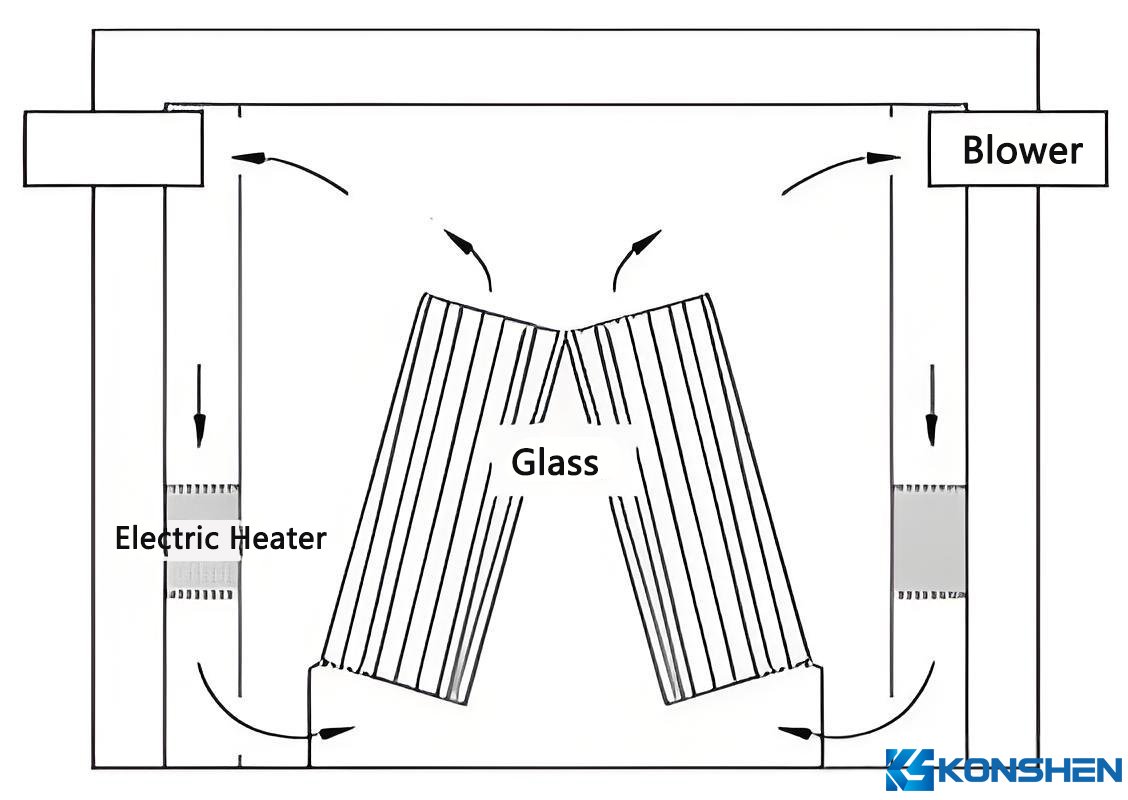 Heat Soak Testing (HST) is a secondary heat treatment process applied to tempered glass. Its core principle is to accelerate the phase transformation of NiS crystals inside the glass by maintaining the glass at a specific temperature for a certain period of time.
In the heat soak furnace, the heating rate is controlled not exceeding 1.5 °C/min, and the tempered glass is heated to approximately 290 °C ±10 °C and held at this temperature for a specified duration. This temperature range can accelerate the transformation of NiS crystals from the α-phase to the β-phase, which causes the inclusions to expand in volume. If NiS particles that may lead to spontaneous breakage exist inside the glass, this expansion may trigger premature fracture within the heat soak furnace.
Through this process, tempered glass panels with potential spontaneous breakage risks can be effectively identified and removed before installation or use.
Glass Loading Preparation
Tempered glass that has completed the tempering process and passed appearance and dimensional inspections is first sorted according to specifications. The glass panels are then neatly placed on specialized heat soak racks, ensuring appropriate spacing between each panel to prevent contact or uneven stress. The loaded racks are slowly pushed into the heat soak furnace. At the same time, the furnace door sealing condition, temperature sensors, and control systems are checked to ensure they are functioning properly, thereby creating a stable process environment for the subsequent heat soak treatment.
Heating Stage
After the heat soak furnace is started, the temperature inside the furnace gradually increases according to the preset program. The temperature typically rises slowly and evenly to prevent additional thermal stress caused by excessive temperature gradients in the glass. By precisely controlling the heating system, the furnace temperature gradually approaches the target temperature range (usually around 290 °C). Meanwhile, the temperature uniformity in different areas of the furnace is monitored to ensure that all glass panels are heated under consistent conditions.
Soaking (Holding) Stage
Once the furnace temperature reaches the set value, the process enters the constant temperature holding stage, usually maintained at approximately 290 °C ±10 °C for several hours. The main purpose of this stage is to promote the phase transformation and expansion of nickel sulfide (NiS) crystals that may exist within the tempered glass, thereby causing defective glass panels to break in advance. Through long-term stable heat soaking, glass panels with potential spontaneous breakage risks can be effectively screened out, improving the safety of the final products.
Cooling Stage
After the holding period is completed, the heat soak furnace enters the controlled cooling stage, during which the furnace temperature gradually decreases. The cooling process must remain uniform and gradual to prevent the formation of new thermal stresses caused by sudden temperature differences. As the temperature gradually drops to a safe range, the furnace door can be opened, and the glass completes its final cooling in a relatively stable environment, ensuring that its internal stress structure remains stable.
Unloading and Quality Inspection
After the glass has cooled to an appropriate temperature, it is removed from the heat soak furnace and subjected to quality inspection. At this stage, the glass is checked for breakage, edge damage, or other abnormalities, and the number of breakages during the heat soak process is recorded. Through this step, it can be ensured that the tempered glass entering the market has undergone heat soak screening, significantly reducing the risk of spontaneous breakage and improving the overall safety and reliability of the product.
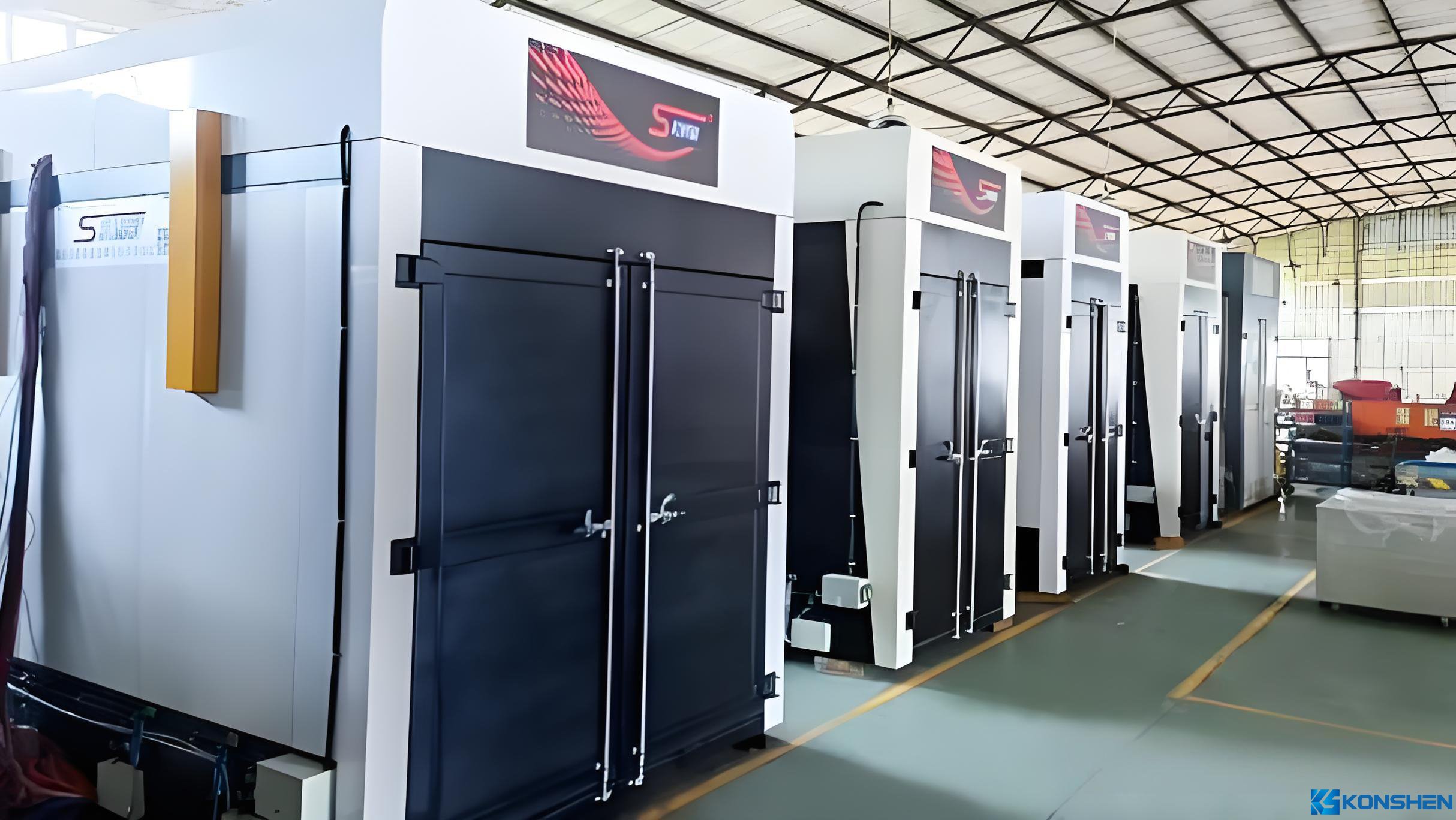
Heat soak testing equipment (Heat Soak Test Furnace) is primarily used to perform high-temperature constant heating on tempered glass in order to identify and eliminate glass panels containing nickel sulfide (NiS) inclusions, thereby reducing the risk of spontaneous breakage. The equipment structure generally consists of the following main components:
Heat Soak Furnace
The heat soak furnace is the core equipment used in the heat soak testing process. Its main function is to provide a stable and uniform high-temperature environment for tempered glass. The furnace body typically adopts a steel structural shell with high-temperature insulation layers installed inside to reduce heat loss and maintain temperature stability within the furnace.
The furnace is usually equipped with electric heating elements and a circulating air system, allowing hot air to continuously circulate inside the chamber to ensure uniform temperature distribution. Through a temperature control system, the furnace temperature is precisely regulated to reach approximately 290 °C and maintained at this level. Under this condition, any NiS inclusions present in the tempered glass may undergo phase transformation and expansion, causing defective glass panels to break prematurely and thereby completing the heat soak testing process.
Temperature Control and Monitoring System
During the heat soak testing process, temperature stability and uniformity are extremely important. Therefore, the equipment must be equipped with a comprehensive temperature control and monitoring system. This system typically includes thermocouple temperature sensors, temperature controllers, and automated control systems.
Multiple temperature sensors are distributed at different positions inside the furnace to monitor temperature changes in real time and transmit data back to the control system. The control system automatically adjusts the heating power according to preset programs, ensuring that the heating, holding, and cooling stages comply with process requirements. At the same time, the system records the temperature profile curve, enabling quality traceability and process analysis for the heat soak treatment.
Glass Loading Racks and Transportation Devices
Glass loading racks are important auxiliary equipment used to place tempered glass panels during the heat soak process. These racks are generally made of high-temperature-resistant metal materials, providing good strength and thermal resistance.
The structural design of the racks ensures that there is sufficient spacing between glass panels, preventing contact and uneven stress so that each panel can be heated uniformly. Some heat soak furnaces are also equipped with rail-mounted carts or automated loading and unloading systems, which mechanically transport the loaded glass into or out of the furnace. This not only improves production efficiency, but also reduces the risk of damage caused by manual handling.
Insulation Materials
The interior of the heat soak furnace is typically lined with high-temperature insulation materials, such as refractory fibers, ceramic fiber boards, or high-temperature insulating bricks. These materials provide excellent thermal insulation and heat resistance, effectively reducing heat loss and maintaining stable furnace temperatures.
A well-designed insulation structure can also minimize the influence of external environmental conditions on the furnace temperature, ensuring uniform temperature distribution during the heat soak process. In addition, it helps reduce energy consumption and improve the overall operating efficiency of the equipment.
To ensure safe and stable operation, heat soak testing equipment is also equipped with various auxiliary materials and safety devices. For example, high-temperature sealing materials are used for furnace doors to prevent heat leakage, and heat-resistant cables are used to connect heating elements with the control system.
In addition, the equipment is usually fitted with over-temperature protection devices, alarm systems, and automatic power-cut protection systems. If abnormal temperatures occur or equipment malfunctions arise during operation, the system can immediately issue warnings or automatically stop operation, effectively ensuring both equipment safety and operator protection.
At present, the field of architectural glass has established relatively comprehensive technical standards. Internationally, European standards and relevant national regulations are widely adopted, specifying requirements for heat soak equipment, temperature control, treatment duration, and testing methods.
European Standard EN 14179
The European Standard EN 14179 – “Heat Soak Tested Thermally Toughened Safety Glass” is currently one of the most widely applied international standards for heat soak testing. This standard provides detailed requirements for furnace structure, temperature uniformity, testing procedures, and quality control. According to EN 14179, tempered glass must be heated in a heat soak furnace to approximately 290 °C ±10 °C and held for a specified period, allowing any potential NiS (nickel sulfide) inclusions inside the glass to undergo phase transformation, break in advance, and be screened out. Heat soak testing performed in compliance with EN 14179 can significantly reduce the probability of spontaneous breakage in tempered glass during actual use.
Chinese Standard GB/T 15763 Series
In China, the production and quality control of tempered glass primarily follow the GB/T 15763 series – “Safety Glass for Building”. These standards cover performance requirements, testing methods, and safety indicators for tempered glass. In engineering applications, projects with high safety requirements often incorporate the heat soak testing process in addition to standard tempering. The process parameters and equipment conditions are controlled with reference to international standards to enhance the safety and reliability of the final product.
Process Parameter Requirements for Heat Soak Testing
According to relevant standards, heat soak testing must be performed in a dedicated heat soak furnace, with the furnace temperature controlled at approximately 290 °C ±10 °C and maintained at a stable holding temperature. The process typically consists of heating, holding, and cooling stages, with the holding time generally no less than 2 hours. During this stage, temperature distribution inside the furnace should be uniform, ensuring that all glass panels undergo treatment under the same conditions, which guarantees the effectiveness of the heat soak process.
Equipment and Inspection Requirements
Standards also impose strict requirements on heat soak equipment. For instance, the furnace must be equipped with a precise temperature control system and a temperature recording device to ensure that the entire process complies with the prescribed procedure. The equipment should also be able to monitor temperatures at multiple locations in real time and record a complete temperature profile for quality inspection and project verification purposes. These measures ensure the stability and reliability of the heat soak testing process.
To ensure that tempered glass has undergone heat soak testing in compliance with relevant standards and meets service requirements, a series of quality inspections are performed. By evaluating appearance, dimensions, strength, and stress, the overall quality and safety performance of the glass can be comprehensively assessed, ensuring its suitability for engineering applications.
Appearance Inspection
Appearance inspection is one of the most basic testing methods. It primarily involves visual examination of the glass surface to detect defects such as scratches, bubbles, inclusions, chipping, or cracks. Under natural light or specified inspection lighting, the glass is observed from certain distances and angles to ensure overall transparency, flatness, and surface quality without defects that could affect usability or aesthetics. Appearance inspection can also help identify any breakage or surface damage that may occur during the heat soak process.
Dimensional and Shape Inspection
Dimensional inspection involves checking the length, width, thickness, and edge quality of the glass panels to verify compliance with design specifications. Tools such as vernier calipers, steel measuring tapes, or thickness gauges are commonly used, and the flatness, diagonal deviation, and edge processing of the glass are also assessed. Dimensional inspection ensures that glass panels fit properly during installation, avoiding construction issues caused by excessive dimensional deviations.
Surface Stress Inspection
The strength of tempered glass primarily derives from its surface compressive stress, making surface stress measurement a key method for evaluating glass quality. A stress tester is typically used to measure the stress values on the glass surface to confirm whether they meet the technical requirements for tempered glass. By evaluating the magnitude of surface compressive stress, the effectiveness of tempering can be determined, ensuring the glass possesses adequate mechanical strength and safety performance.
Fragment Characteristics Inspection
Fragment inspection is used to verify the safety performance of tempered glass. When broken, tempered glass should shatter into many small, blunt-edged fragments to minimize the risk of injury. During testing, selected samples are deliberately broken, and the number and shape of fragments per unit area are analyzed to determine whether the glass meets the relevant safety glass standards.
Record Keeping and Quality Traceability
After completing all inspections, the results are recorded and archived, including temperature curves from the heat soak process, measurement data, and sample test results. These records serve not only as evidence of product quality compliance but also provide a basis for quality traceability in case of issues. This information can be used to optimize production processes continuously, improving the stability and reliability of the glass products.
Thick or Large-Area Glass
Examples: Glass panels with thickness ≥12 mm or large single-pane areas such as curtain walls, skylights, or floor-to-ceiling windows.
Reason: Thick or large glass may contain microscopic inclusions (NiS particles) that could lead to spontaneous breakage several years after installation if used directly.
High-Safety Requirement Projects
Examples: Glass used in public spaces, shopping malls, subways, airports, hospitals, etc.
Reason: In these locations, glass breakage poses high safety risks, so additional precautions such as heat soak testing are necessary.
Critical Functional Glass
Examples: Display screen protective glass,weight scale cover glass, automotive windshields, sunroom glass, etc.
Reason: Breakage of these panels could directly affect equipment functionality or personal safety, making it essential to reduce the probability of spontaneous breakage.
Long-Term Use or Large Temperature Variation Projects
Examples: Building curtain walls, exterior windows, skylights, sunrooms, where the goal is to prevent unexpected breakage for 10–20 years.
Reason: Environments with large temperature differences (indoor-outdoor, hot-cold cycles) can cause internal inclusions to expand, triggering spontaneous breakage. Heat soak testing can pre-activate potential risks and ensure long-term safety and reliability.
Thin or Small-Area Glass
Examples: Glass panels with thickness ≤6 mm or small areas such as small windows, furniture glass, decorative panels.
Reason: Small and thin glass has a very low probability of spontaneous breakage, making additional treatment unnecessary.
Applications with Lower Safety Risks
Examples: Indoor partitions, furniture decorations, household glass, etc.
Reason: Even if the glass breaks, the impact on personal or property safety is limited, so standard tempering is sufficient.
As an additional process for tempered glass, heat soak testing adds a certain cost before the glass leaves the factory. However, its primary function is to provide extra safety assurance, making it especially suitable for thick glass, large-area panels, or applications with significant temperature variations.
Sources of Cost
Energy Consumption
Heat soak testing requires heating the glass to high temperatures and maintaining it for a period of time, which consumes a large amount of electricity or gas.
Higher temperatures or longer holding times lead to increased energy consumption, thus raising the cost.
Equipment Operation Costs
The heat soak furnace is a specialized piece of equipment that must operate stably and undergo regular maintenance.
The operational costs of the furnace heating system and air circulation system are also part of the total heat soak cost.
Labor Costs
Heat soak testing involves multiple steps, including loading the furnace, operating, monitoring, and post-processing inspection, all of which require skilled personnel.
Labor costs vary depending on production volume and operational complexity.
Glass Breakage Losses
During heat soak testing, a small portion of glass may break prematurely due to internal inclusions or stress, resulting in material loss.
For thick or large glass panels, this loss may be slightly higher, but it is a necessary trade-off to prevent more serious safety risks in service.
In general, heat soak testing increases the cost of tempered glass by approximately 5%–15%, depending on factors such as glass thickness, size, batch quantity, and process requirements.
Tempered glass, with its excellent mechanical properties and safe fragmentation characteristics, has become an essential material in modern architectural and industrial applications. However, due to factors such as NiS inclusions, tempered glass still carries a certain probability of spontaneous breakage.
Heat soak testing, as an effective quality control measure, can significantly reduce the risk of spontaneous breakage by accelerating the phase transformation of NiS and pre-screening glass with potential defects. While heat soak testing cannot completely eliminate all risks of spontaneous breakage, it remains one of the most effective safety screening methods in the industry today.
With the continuous increase in building safety requirements, the application of heat soak testing in tempered glass production is expected to become increasingly widespread, playing a crucial role in enhancing the safety and reliability of glass products.
FAQ
Q1. Can Heat Soak Testing Completely Eliminate Spontaneous Breakage in Tempered Glass?
No.
The primary purpose of heat soak testing is to accelerate the phase transformation of nickel sulfide (NiS) crystals, causing glass panels with potential defects to break in advance during the factory stage and be removed from the production batch. This process can significantly reduce the probability of spontaneous breakage, but because internal inclusions in glass are distributed unpredictably, heat soak testing cannot guarantee complete elimination of spontaneous breakage risk.
Q2. Does Heat Soak Testing Affect the Strength of Tempered Glass?
Generally, no.
Heat soak testing is a secondary heat treatment performed after tempering, with a temperature of approximately 290 °C ±10 °C, which is far below the softening point or stress-relief temperature of tempered glass. Therefore, under proper process conditions, heat soak testing does not significantly alter the original stress structure of the glass and does not noticeably reduce its mechanical strength.
However, if furnace temperature control is unstable or process parameters do not meet the standards, it may affect the stress distribution within the glass. For this reason, heat soak testing must be conducted using compliant equipment and standard process conditions.
Q3. Do All Tempered Glass Panels Require Heat Soak Testing?
Not all tempered glass panels require heat soak testing.
The necessity of heat soak testing mainly depends on factors such as the application environment, safety requirements, and glass size. In general, heat soak testing is recommended for:
Architectural curtain wall glass
Large-area or thick glass panels
Glass installed at height, such as skylights, canopies, or light wells
Public buildings, including shopping malls, airports, and subway stations
Projects with high safety requirements
For small-sized glass, indoor applications, or scenarios with lower safety risks, standard tempering is usually sufficient without additional heat soak testing.
Q4. Why Does Glass Break During Heat Soak Testing?
It is normal for some tempered glass panels to break during the heat soak process.
The main reason is the presence of nickel sulfide (NiS) inclusions inside the glass. When the glass is heated to approximately 290 °C in the heat soak furnace, the NiS crystals undergo a phase transformation and expand in volume, disrupting the internal stress balance of the glass and causing it to break prematurely.
This type of breakage is actually an important purpose of heat soak testing: it allows glass panels with potential spontaneous breakage risks to be identified and removed at the factory stage, preventing unexpected breakage during later use.
Q5. How Long Does Heat Soak Testing Take?
A complete heat soak testing cycle typically lasts 4–8 hours, depending on factors such as furnace type, glass thickness, and production process.
The process generally consists of three stages:
Heating stage
Soaking (holding) stage – usually no less than 2 hours
Controlled cooling stage
During the soaking stage, the glass is maintained at approximately 290 °C ±10 °C to ensure that NiS crystals undergo sufficient phase transformation, effectively screening out glass panels with potential defects.
Q6. How to Determine Whether Tempered Glass Has Undergone Heat Soak Testing?
The following methods are commonly used to verify if tempered glass has undergone heat soak testing (HST):
Product Labels or Certificates
Many manufacturers indicate on the product certificate or technical documentation that the glass has been subjected to heat soak testing.
Project Quality Documentation
For construction projects, it is usually required to provide heat soak testing reports or temperature profile curves.
Manufacturer Quality Records
Compliant heat soak furnaces record complete temperature profiles during the process, which can be used for quality traceability.
It is important to note that heat soak testing cannot usually be identified by appearance alone, so relevant documentation and quality records are essential for verification.
Q7. Is Tempered Glass Safer After Heat Soak Testing?
Compared to ordinary tempered glass, heat soak tested tempered glass generally provides higher safety during use.Heat soak testing allows for the pre-screening and removal of most glass panels containing nickel sulfide (NiS) inclusions, thereby reducing the probability of spontaneous breakage during service.
Ready to take your glass project to the next level? Contact us today to discuss your custom glass needs and get a quote!
contact us